

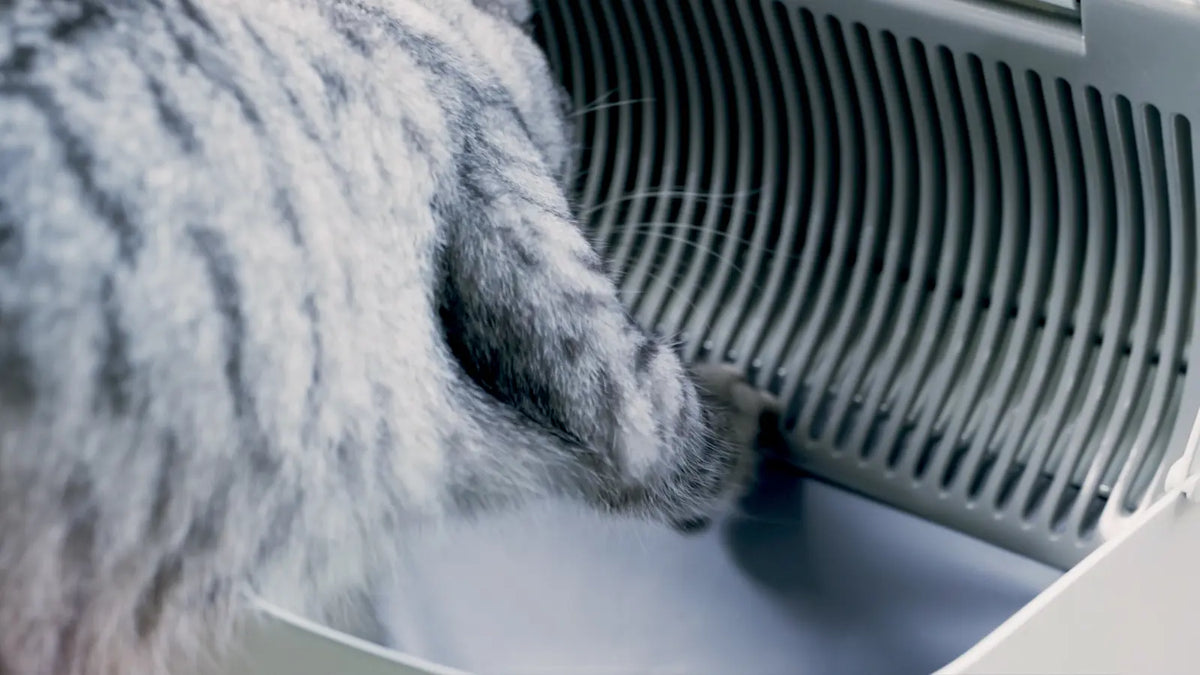
Automatic litter boxes promise a cleaner home and fewer daily scooping sessions. But for many cat owners, convenience comes with an important question: Are automatic litter boxes actually safe for cats?
Concerns about moving mechanisms, sensor failures, and cats becoming trapped have made safety a major consideration when choosing a self-cleaning litter box. And with so many different designs on the market, it's not always easy to know which features genuinely matter.
The answer depends on more than the number of sensors a machine has. Its physical structure, cleaning movements, detection system, and suitability for your cat all play a role.
This guide explains what to look for, which potential risks deserve attention, and how the Popur S7 SLS approaches safety through its Split Litter System.
In This Guide
- Are Automatic Litter Boxes Safe for Cats?
- What Can Make an Automatic Litter Box Dangerous?
- What Safety Features Should You Look For?
- Structural Safety vs. Safety Sensors
- How the Popur S7 SLS Approaches Safety
- Why Doesn't the Popur S7 SLS Always Stop Cleaning?
- Safety Considerations for Kittens, Seniors, and Curious Cats
- Frequently Asked Questions
Are Automatic Litter Boxes Safe for Cats?
Yes, automatic litter boxes can be a suitable option for many cats, but their safety depends on how they are designed, operated, and maintained.
Unlike a traditional litter box, an automatic model contains moving components that collect or separate waste. The way these components move, and whether cats can safely access or leave the litter area during operation, are important differences between products.
Some machines use rotating drums, while others rely on rakes, sifters, or tilting trays. Each mechanism comes with its own design considerations.
A well-designed automatic litter box should reduce foreseeable mechanical hazards, detect cat activity as intended, and provide clear instructions for appropriate use. It should also accommodate the cat's size, age, mobility, and behavior.
No automatic litter box should be assumed completely risk-free simply because it has sensors or advertises multiple safety features.
For cat owners, the most useful approach is to understand how the machine works before relying on it for everyday litter care.
What Can Make an Automatic Litter Box Dangerous?
Not every automatic litter box presents the same risks. Several factors deserve closer attention when comparing designs.
Enclosed Spaces and Entrapment Risks
Some automatic litter boxes clean by rotating an enclosed drum or chamber. Depending on the mechanism, the relationship between the entrance, drum, and surrounding housing may change during operation.
The important question isn't simply whether the machine is enclosed. It's whether the design could obstruct a cat's exit or create a hazardous trapping space at any point in its cleaning movement.
An enclosed design is not automatically unsafe. Some manufacturers use mechanical stops or other physical safeguards to maintain access throughout rotation.
Before buying, look at the complete cleaning sequence rather than judging safety from a stationary product image.
Pinch Points and Moving Components
A pinch point is an area where moving parts could press an object against another surface or where a gap becomes narrower during movement.
Potential contact areas can occur around rotating components, sliding mechanisms, waste openings, and other moving assemblies.
The shape of these gaps, the movement path, the force involved, and any physical barriers or damping mechanisms all affect the potential risk.
A useful safety question is: What happens if a paw or another object comes close to a moving part?
Look for an explanation of how the machine limits mechanical hazards, rather than relying on marketing phrases such as "completely safe" or "100% protected."
Sensor Limitations and Unexpected Movement
Many automatic litter boxes use weight sensors, motion detectors, proximity sensors, or a combination of technologies.
These systems can help determine when a cat has entered or left the litter box, when cleaning should begin, or when a particular mode should interrupt operation.
However, detecting a cat and stopping an ongoing cleaning cycle are not necessarily the same function.
Sensor behavior may also depend on calibration, environmental conditions, detection thresholds, and the operating mode.
That's why owners should understand not only what sensors a machine contains, but also what those sensors are programmed to do.
Stress, Accessibility, and Health Monitoring
Mechanical safety is only one part of choosing an appropriate litter box.
A cat may avoid a machine because of unfamiliar movement, noise, limited interior space, or an uncomfortable entrance. Kittens, senior cats, and cats with mobility difficulties may have different needs.
Automatic cleaning can also make it easier to overlook changes in urine or stool if owners stop inspecting the litter area altogether.
A self-cleaning system should reduce repetitive work without replacing regular observation of your cat's bathroom habits.
What Safety Features Should You Look For?
If you're searching for the safest automatic litter box for your cat, focus on the actual design and operating behavior rather than the number of safety claims on the product page.
The following questions can help you compare different models.
| What to Check | Why It Matters |
|---|---|
| Entrance and exit path | Check whether the cat can leave the litter area without being trapped by the cleaning mechanism. |
| Moving components | Look for narrowing gaps, potential pinch points, and protective mechanical design. |
| Cat detection | Understand which sensors are used and what they actually control. |
| Behavior during cleaning | Find out whether the machine continues, pauses, or changes operation when a cat approaches. |
| Malfunction and power-loss behavior | Review the manufacturer's explanation of how the mechanism behaves during interruptions or faults. |
| Size and accessibility | Confirm that the litter area and entrance suit your cat's body size and mobility. |
| Maintenance and inspection | Check whether important components can be inspected and kept clean. |
Watch a Complete Cleaning Cycle
A video showing the entire cleaning process can reveal more than a list of features.
Pay attention to how the mechanism moves, whether the entrance changes shape, and how waste travels from the litter area into the collection compartment.
If a manufacturer demonstrates its safety mechanisms, look for a clear explanation of the design conditions and testing method. Never place your hands, a cat, or another animal into a moving mechanism to test its safety.
Read the Operating Instructions
Before allowing a cat to use a new automatic litter box, check the manufacturer's requirements concerning age, weight, supported litter, setup, and operating modes.
Find out which protections work automatically and which features must be enabled or configured.
These details are especially important if your cat is particularly curious, easily startled, very young, or experiencing mobility difficulties.
Structural Safety vs. Safety Sensors: What's the Difference?
Automatic litter box safety is often discussed in terms of sensors. But the physical design of a machine is equally important.
Structural safety refers to how the mechanical system is designed to avoid or limit hazards. It includes the arrangement of moving parts, access openings, clearances, barriers, and mechanisms that limit movement or force.
Sensor-based protection uses detection and electronic controls to respond to conditions such as a cat approaching, entering, or leaving the litter area.
These approaches serve different purposes.
A sensor may detect an animal and trigger a programmed response. A structural feature, by contrast, can limit a particular mechanical hazard without requiring a detection event.
Neither approach should be treated as a substitute for assessing the complete product.
An effective safety design considers what hazards can be reduced physically, which situations require detection, and what happens when a component or sensor does not behave as expected.
For consumers, this distinction makes it easier to evaluate claims such as "multiple safety sensors" or "automatic stop protection."
The more useful questions are:
- What specific risk is each feature designed to address?
- Does the machine's physical design reduce that risk independently?
- Under which operating conditions will its sensors intervene?
- What does the manufacturer recommend if the system behaves unexpectedly?
Understanding these differences gives you a stronger basis for comparing automatic litter boxes than simply counting sensors.
To see why structural design matters, watch the video below comparing different automatic litter box designs. Pay attention to how the moving components and access paths are arranged.
How the Popur S7 SLS Approaches Safety
Safety is a foundational element of Popur's CARESS design philosophy and a central consideration behind the development of the Split Litter System (SLS).
Rather than placing the cat inside an enclosed rotating waste-processing chamber, the Popur S7 SLS separates the litter tray from the external waste bin.
This architecture changes how the cat interacts with the machine and how cleaning takes place.
An Open Litter Area, Separate from Waste Collection
The Popur S7 SLS combines a familiar open-top litter tray with an external, sealed 11-liter waste bin. The cat uses an open litter area rather than entering a rotating drum. Its head and upper body aren't surrounded by an enclosed cleaning chamber, and the tray remains accessible from three sides. During cleaning, the machine sifts the litter and transfers collected waste into the separate bin.
This arrangement is designed to avoid the enclosed trapping configuration associated with certain automatic litter box mechanisms. It also gives cats room to approach and position themselves without navigating a narrow tunnel.
For large or long-bodied cats, that open layout provides an additional comfort advantage. Our automatic litter box guide for large cats explains how to evaluate usable space and individual fit.
Moving Parts Designed with Physical Protection in Mind
The Popur S7 SLS uses a dynamic sifter to separate waste from clean litter.
According to Popur's product design documentation, the sifter is lightweight and incorporates damping and low-force movement characteristics intended to reduce contact hazards.

The machine also uses an accordion-style protective cover around its moving assembly, with a structure designed to shield accessible mechanical areas.

Its external waste bin has a hood designed to yield when pushed from inside, rather than acting as a rigid trapping barrier.

These features address different physical interactions around the system. They do not eliminate the need for correct assembly, regular inspection, and appropriate use.
Motion Detection and Weight Sensing
The Popur S7 SLS also includes two types of cat-detection sensors.
Its primary millimeter-wave radar detects motion and proximity around the litter box. A load-cell weight sensor provides additional weight-related information and supports pet activity tracking.
Depending on the selected mode and settings, the system uses these inputs to determine when cleaning should begin or when an enabled feature should respond to detected activity.
Motion sensitivity and detection range can be customized through the Popur S7 App.
These technologies complement the physical design, but understanding their operating logic is essential. In particular, the standard cleaning mode and Sentinel Mode do not respond to nearby cats in the same way.
For detailed sensor settings, detection thresholds, and mode descriptions, refer to Popur's Product Docs — Cat Sensors & Safety Peculiarities.
Pet Activity Insights for Health Awareness
The Popur App records litter box visit frequency, time spent during each visit, and weight measurements, giving owners a clearer picture of their cats' daily routines.
Changes in bathroom frequency, visit duration, or weight over time may help owners notice unusual patterns and pay closer attention to their cats' well-being. These insights are useful for ongoing observation, although they are not a substitute for veterinary assessment or diagnosis.

For multi-cat households, tracking litter box activity can be especially helpful when several cats share the same station. For more on shared litter box use, cleaning capacity, and daily routines, explore our guide to automatic litter boxes for multiple cats.
Why Doesn't the Popur S7 SLS Always Stop Cleaning?
One question owners sometimes ask is why the Popur S7 SLS continues cleaning when a cat approaches or even steps into the litter area.
This behavior is important to explain clearly.
In its standard cleaning mode, the Popur S7 SLS does not automatically pause an ongoing cycle simply because a cat approaches.
The SLS was designed around an open litter area and physically buffered moving components. Its standard cleaning behavior reflects that structural approach rather than relying on a pet-triggered stop for every nearby movement.
This does not mean the machine has no cat sensors. Instead, the sensors perform different functions depending on the selected mode.
What Does Sentinel Mode Do?
For owners who prefer the machine to stop cleaning when nearby pet activity is detected, Popur provides Sentinel Mode.
When Sentinel is enabled, the system monitors pet presence during cleaning and temporarily pauses the cycle when its detection conditions are met.

This feature is especially useful for cats that are easily startled by movement or particularly curious about the cleaning process.
Sentinel may introduce brief interruptions or delays because the system waits for suitable conditions before continuing.
How to enable Sentinel Mode:
Popur S7 App → Device Page → Modes → Sentinel → Enable
Sentinel is the dedicated mode that pauses an ongoing cleaning cycle in response to pet detection. Separately, the system has protection for an abnormal over-voltage condition.

How Is Sentinel Different from Automatic Mode?
| Function | Standard Automatic Mode | Sentinel Mode Enabled |
|---|---|---|
| Starts cleaning based on configured detection and timing | Yes | Works alongside the applicable cleaning settings |
| Automatically pauses an ongoing cleaning cycle simply because a cat approaches | No | Yes, when the enabled detection conditions are met |
| Intended purpose | Routine automatic waste removal | Additional pet-presence response during cleaning |
| Possible effect on cleaning time | Normal configured cycle behavior | May introduce pauses or delays |
This distinction is worth understanding before choosing or setting up the machine.
If a cat is nervous around moving litter box components, enabling Sentinel may provide a more comfortable experience.
Safety Considerations for Kittens, Seniors, and Curious Cats
Cats differ not only in size, but also in how they respond to unfamiliar equipment. A safe introduction should account for their physical abilities and behavior.
Kittens and Smaller Cats
Kittens may be especially interested in investigating moving parts. Their small size and changing weight can also affect how some detection systems respond.
Before using any automatic litter box with a kitten, check the manufacturer's current age and weight guidance, as well as the detection requirements for the model.
For the Popur S7 SLS, the optional Caring Mode can make pet-activity detection more responsive to lightweight or low-movement animals under its configured conditions.
However, Caring Mode and Sentinel Mode have different purposes. Enabling Caring does not replace Sentinel's cleaning-pause function.
When introducing a young cat, supervise its response and consider using manual cleaning until it is comfortable and its suitability for the system has been confirmed.
Senior Cats and Cats with Limited Mobility
For older cats, entry height and ease of movement may be as important as the cleaning mechanism.
A cat experiencing stiffness, arthritis, or reduced mobility may have difficulty stepping into a litter box even when the litter area is spacious.
Choose an accessible location with a clear entry and exit path. For cats with limited mobility, a sturdy step may make getting in and out easier.
Curious or Easily Startled Cats
Some cats barely notice an automatic cleaning cycle. Others may investigate the moving parts or hesitate when the machine starts.
Introduce the machine gradually. Let your cat become familiar with its shape and location before relying on automatic operation.
For a curious or easily startled cat using the Popur S7 SLS, Sentinel Mode may help reduce unexpected movement nearby by pausing cleaning under its configured detection conditions.
A positive experience matters. The goal is for your cat to approach and use the litter box voluntarily, without being frightened or discouraged.
Frequently Asked Questions
Can an automatic litter box hurt a cat?
An automatic litter box contains moving components, so potential hazards depend on the design and operating conditions. Entrapment points, moving gaps, malfunction behavior, and sensor response all deserve attention.
Choose a product with clearly explained mechanical safeguards, follow its instructions, and regularly inspect the equipment.
Do all automatic litter boxes stop when a cat approaches?
No. Different products use different mechanisms and detection logic.
Some machines pause cleaning when cat activity is detected. Others emphasize structural design and use sensors for functions such as detecting visits or initiating cleaning.
For example, the Popur S7 SLS does not automatically pause its standard cleaning cycle simply because a cat approaches. Its optional Sentinel Mode provides pet-detection-based pauses during cleaning.
Is an open-top automatic litter box safer than an enclosed one?
An open-top design avoids certain enclosed-space configurations, but the absence of a roof alone does not establish overall safety.
The movement path, accessible mechanical gaps, operating force, sensor behavior, and fault handling still matter.
Some enclosed models also incorporate mechanical safeguards to maintain an accessible entrance. Evaluate the actual design rather than assuming every product in one category behaves the same way.
Can kittens use automatic litter boxes?
It depends on the kitten's age, weight, behavior, and the manufacturer's operating requirements.
Smaller cats may interact with mechanisms differently, and sensor thresholds can matter. Check the specific product instructions and supervise any introduction.
If you're uncertain whether an automatic model is appropriate, continue using an accessible traditional litter box and ask your veterinarian.
Does the Popur S7 SLS require Wi-Fi to operate safely?
The Popur S7 SLS is designed to operate without a continuous internet connection. Its core operating functions do not depend on a live cloud connection.
The Popur S7 App provides configuration, monitoring, and additional controls. Owners should confirm their preferred settings, including Sentinel, before relying on those features.
What should I do if my automatic litter box behaves unexpectedly?
Stop using automatic operation if you notice unusual movement, error states, damaged components, or behavior that appears inconsistent with the manufacturer's instructions.
Keep your cat away from the operating mechanism, check the official troubleshooting guidance, and contact the manufacturer's support team when necessary.
Do not attempt to test moving parts with your hands or allow your cat to investigate a suspected fault.
Can an automatic litter box replace regular litter box checks?
No. Automatic cleaning reduces scooping, but owners should still check litter levels, waste disposal, cleanliness, and their cats' normal bathroom habits.
Changes in urination, stool appearance, frequency, or litter box avoidance can be important health clues. App activity records may be useful, but they are not a substitute for direct observation or veterinary care.
Choosing Safety with Confidence
When evaluating an automatic litter box, look beyond claims about the number of sensors or how quickly the machine stops.
Understand the physical structure, the movement of its cleaning mechanism, the situations in which sensors intervene, and whether the system suits your cat's age, size, and habits.
The Popur S7 SLS approaches these questions through its open Split Litter System, physically buffered moving components, and configurable detection features, including Sentinel Mode.
The most reassuring choice is a litter box whose design and operating behavior you understand—and one your cat can use comfortably.
Explore the Popur S7 Split Litter System to learn more about its safety-focused design, features, and available configurations.
Aktie:
What Makes the Best Automatic Litter Box for Multiple Cats?